Seaweed project within BalticSea 2020

Anyone who is interested in the Baltic Sea might have heard of Baltic Sea 2020 Foundation.
Baltic Sea 2020 is a foundation founded by Bjorn Carlson through a donation of 500 million SEK (55 million EUR). The Baltic Sea 2020 Foundation’s assets shouldfund projects that are action-oriented, innovative and helps to improve the knowledge of the Baltic Sea continuously until 2020. The BalticSea 2020 Foundation began its work in 2006 and has to date initiated more than 70 projects, of which 25 are ongoing.

One of these projects is about trying to re-establish bladderwrack inside Björnöfjärden, a bay outside Stockholm. Björnöfjärden is heavily eutrophicated and the water is quite turbid with particles that prevents the light from penetrating. It quickly becomes dark below the surface, so that only a few stands of seaweed survive here. Observant locals have informed us that there was plenty of seaweed in the Björnöfjärd in the past, however.

So, seaweed enthusiasts to the rescue!

Susanne Qvarfordt is ready to establish bladderwrack.

Susanne Qvarfordt is ready to establish bladderwrack.

Susanne Qvarfordt from the environment surveillance company Sveriges Vattenekologer has initiated a project that will examine what factors might prevent the seaweed population from re-establishing in Björnöfjärden.
In addition, she asked the BalticSeaWeed blog to help with our expertise!

So, during the first days of June, we collected fertile tips of bladderwrack. These were sexed (we cut the receptacles and see if they are male or female), so that we would get an appropriate ratio of males and females at each site.

Sexing seaweed is best done with a scalpell and a magnifying glass.

Sexing seaweed is best done with a scalpell and a magnifying glass.

The bladderwrack were made into small beautiful fertile bouquets which were then attached to a grid. These will be placed in the water, floating over a number of concrete plates, and hopefully make new small seaweed babies that can attach itself to the plates.

All is ready for a baby boom!

All is ready for a baby boom!

So, now we have placed three grids in Björnöfjärden and three in nearby Fjällsviks Bay, to see if any of the other actions carried out in Björnöfjärden will affect the seaweeds ability to reproduce.
So, keep your fingers crossed that no one gets caught with their anchor or fish tackle in our beautiful grids, and hope for calm weather at Midsummer full moon so that there will be many wee ones.

Placing a seaweed grid with buoys.

Placing a seaweed grid with buoys.

Around Gotland

Yessiree! It’s time to jump into the water again!

After a long winter with lots of ice, and a well deserved trip to warmer water, it was time for yours truly to submerge oneself into the cool waters of the Baltic Sea.

Field season 2013 opened on Wednesday 22 May at the scenic island of Gotland, jewel of the Baltic Sea.

For the faithful reader, it comes as no surprise that it was time for the inventory of summer reproducing bladderwrack around this beautiful island, as part of the investigation we made along the mainland coast and Gotland last year (see previous post on Tångbloggen 2012 – A seaweed odyssey).

Gotland is well known by many botanists for its amazing flora, and the orchids certainly fought for space with primroses and lily of the valley along the road as we drove north from Visby up towards our first stop just south of Lickershamn.

Orchis mascula- Early purple orchid

Orchis mascula- Early purple orchid

Unfortunately, I think most people fail to see how beautiful Gotland is below the surface. The clear water and the dense seaweed forests are magically beautiful and are conveniently found at knee-depth in the water. If you do not like to get wet, you can easily experience life below the surface with a pair of high rubber boots or waders and water binoculars.

Our second stop was out on the island Fårö, at Lauter huvud. At the moment it’s a rather low water level in the Baltic Sea. It is caused by the weather and is not unusual this time of year. But it gets a little tricky to swim when you are constantly running aground. It was easier to walk among the rauks and occasionally stick my head under the surface in order to verify single specimens of Fucus. Quite possibly the occasional tourist who stayed at the car park was wondering what we were doing. One is not exactly discreet in a bright red dry suit. Hope I did not destroy too many photographs by emerging between rauks like a jack-in-the-box.

Having swum a little off the cliff edge, where it goes from 0.5 meters deep to 15 meters, we went to today’s third and last site at Östergarn.

Here the waves rolled in with a quiet rhythm, and if I had not been busy counting, I would certainly have fallen asleep, it was so very peaceful. The sun had come out and warmed my back as I floated about. I saw plaice, viviparous eelpout (Zooarces viviparus), stickleback, and Lesser pipefish (Syngnathus rostellatus).

Plattfisken vilar bland tången.

The plaice is resting among the seaweed.

The night was spent at the nice hostel in Hemsedal, which had very comfortable beds.

Thursday morning began with a trip down to the southernmost tip of Gotland, the Hoburg. Here we encountered more nature lovers in the form of a flock of birdwatchers. The species often nests at the southern tips of both Oland and Gotland and is easily recognized by the telescope that is often worn over the shoulder.

I even saw Red-Backed Shrike (Lanius collurio), Northern Wheatear (Oenanthe oenanthe) and a yellow bird that I didn’t recognize.

The sea was calm and the swans that landed some distance away did not attack the red ball splashing around, muttering through a tube (snorkel). It was nice to see that htere were many small juvenile seaweed individuals there. Reproduction last year was apparently very successful. Always a good sign.

Our last stop for a dip was just south of Klintehamn. On the way there we visited the nice naturum center in Vamlingbo for a short break. With coffee in the body, we parked at what must be Gotland’s busiest road, and changed into work clothes.

“When you take off your pants, five cars and a bus will always appear” – Old jungle proverb

It was the only site with lots of bladders on the wrack! One might think that bladderwrack always have bladders, but no! If the site is exposed to strong wave action, no bladders are formed. This is to minimize wave grip, so that the wrack does not get torn off by the waves.

Blåsor på blåstången - inte en självklarhet.

Bladders on the bladderwrack – not always to be expected.

It was plenty of gammarids, prawns and isopods here, and I hope I got a picture of the Lesser Pipefish hiding amongst the seaweed. It was obvious that there is a lot of nutrients coming out into the water as runnof from land. The seaweed had much filamentous algae growing on them. Swimming across it reminded me of a shaggy rug.

After again having fulfilled the jungle proverb (Why?!?) we headed towards Visby and enrolled into the prison. If we get out tomorrow remains to be seen.

International Seaweed Symposium – Day 4

With rested brains, it is once more time to stock up on more seaweed, both mentally and physically.

All things sweet and seaweedy

All things sweet and seaweedy

After an opening plenary lecture by Iain Neish about the importance of having a vision and being stubborn if we are to succeed with aquaculture, it was time for a cup of coffee, a slice of fruit cake and the day’s first mini-symposium.

Plenary with Iain Neish

Plenary lecture with Iain Neish


Mini Symposium: Cultivation of tropical red seaweeds

The most common species of red seaweed that are farmed are Eucheuma spp., Kappaphycus spp., Porphyra spp. and Gracillaria spp.
In Chile and Peru, it is primarily Gracillaria spp. that is farmed. In Chile, they seek to develop new methods to cultivate seaweed in the lab, instead of taking material from wild populations as many do today. They have also investigated whether it is possible to grow other commercial species.

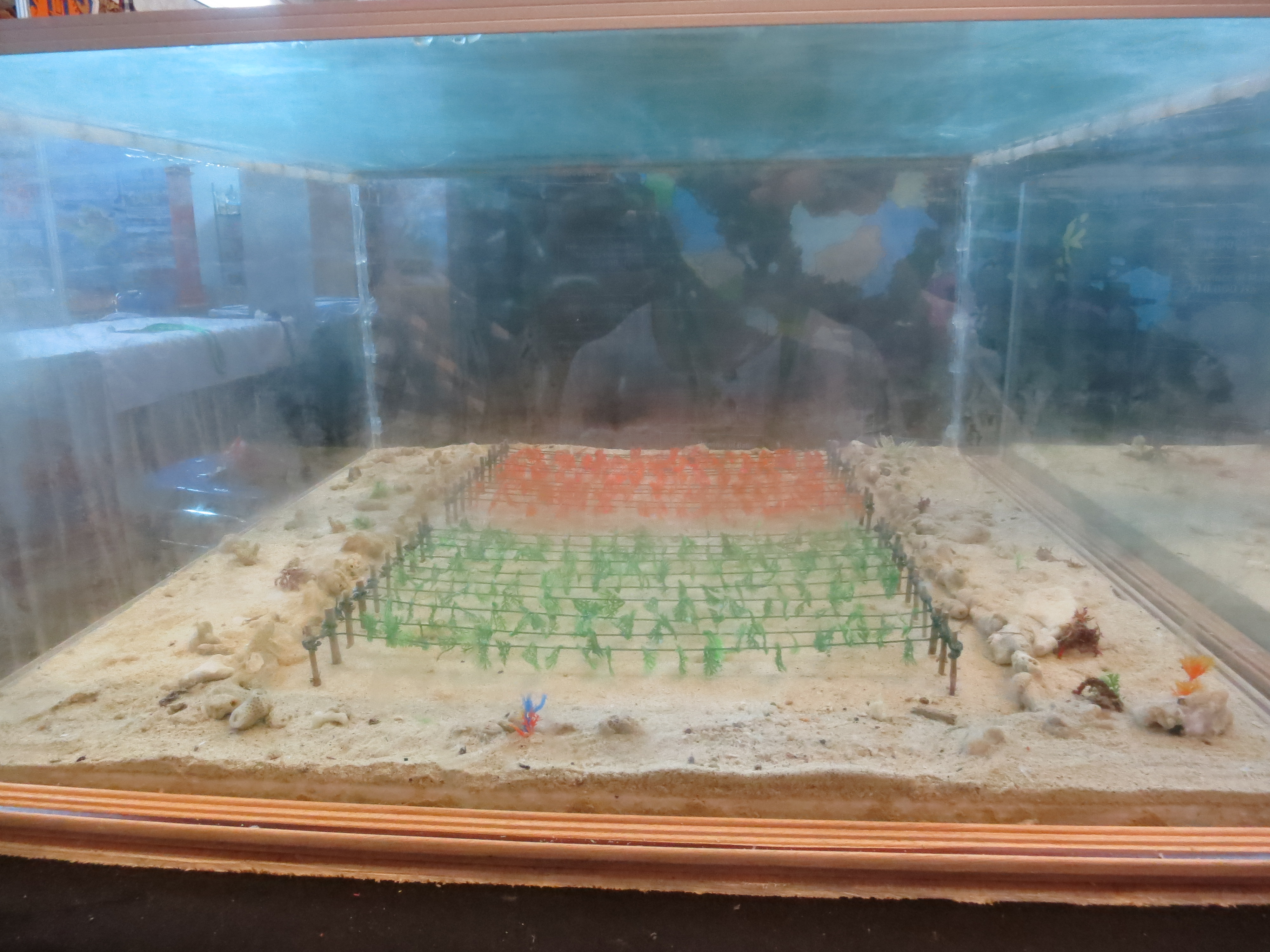
In Malaysia, the Philippines and Indonesia, most seaweed is farmed using the fixed off-bottom technique in shallow waters. The trick is to place them deep enough so that the algae are not harmed by the intense sun during low tide.

Most algae in shallow waters are farmed using the off-bottom method.

Most algae in shallow waters are farmed using the off-bottom method.

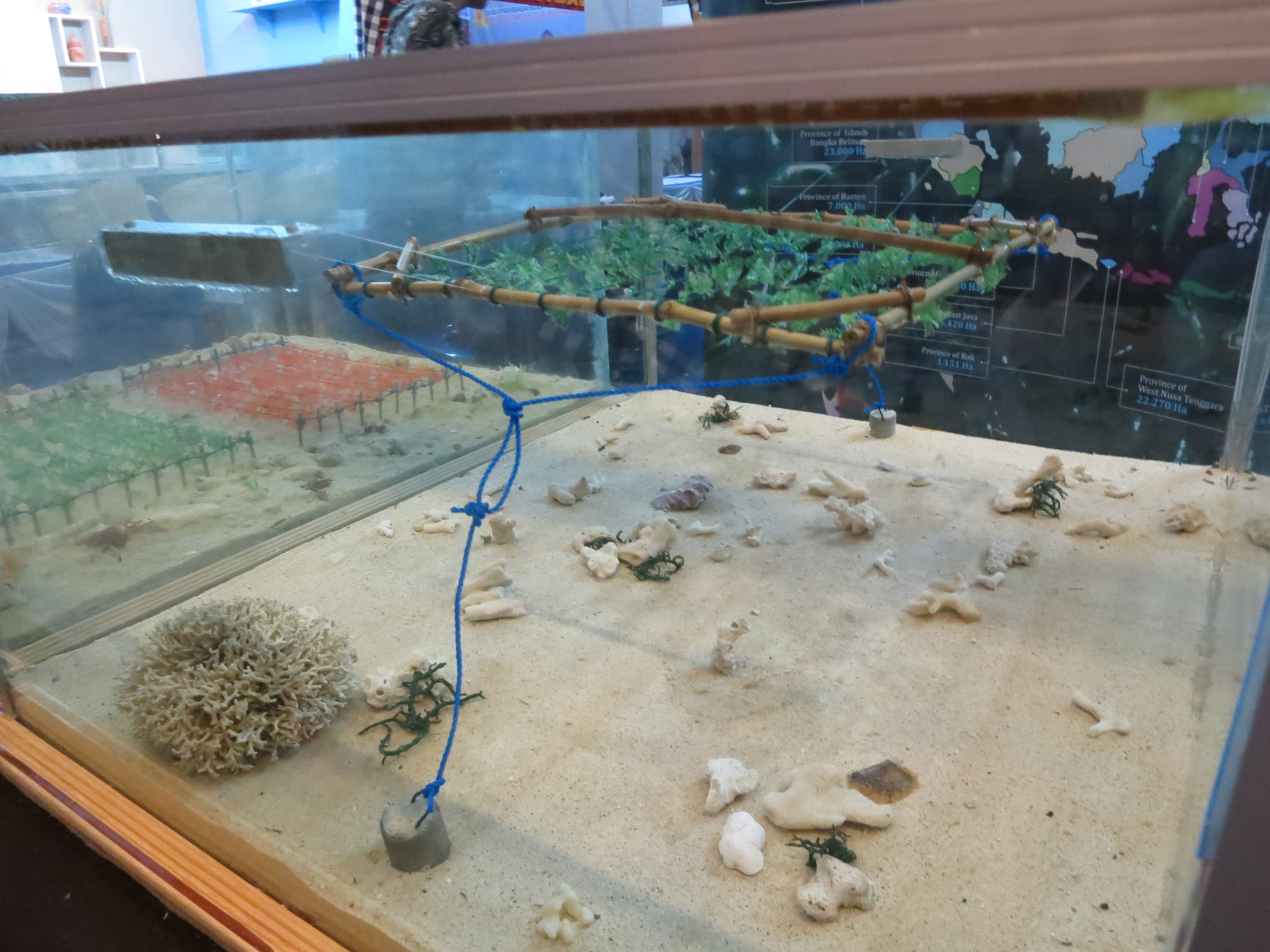
In deeper water, they use the free-swing method, where only one end is fixed at the bottom. The downside is that it takes up quite a lot of space, and then they must be set at such a distance that they do not become entangled in each other.

The free swing method, attached at only one point.

The free swing method, attached at only one point.

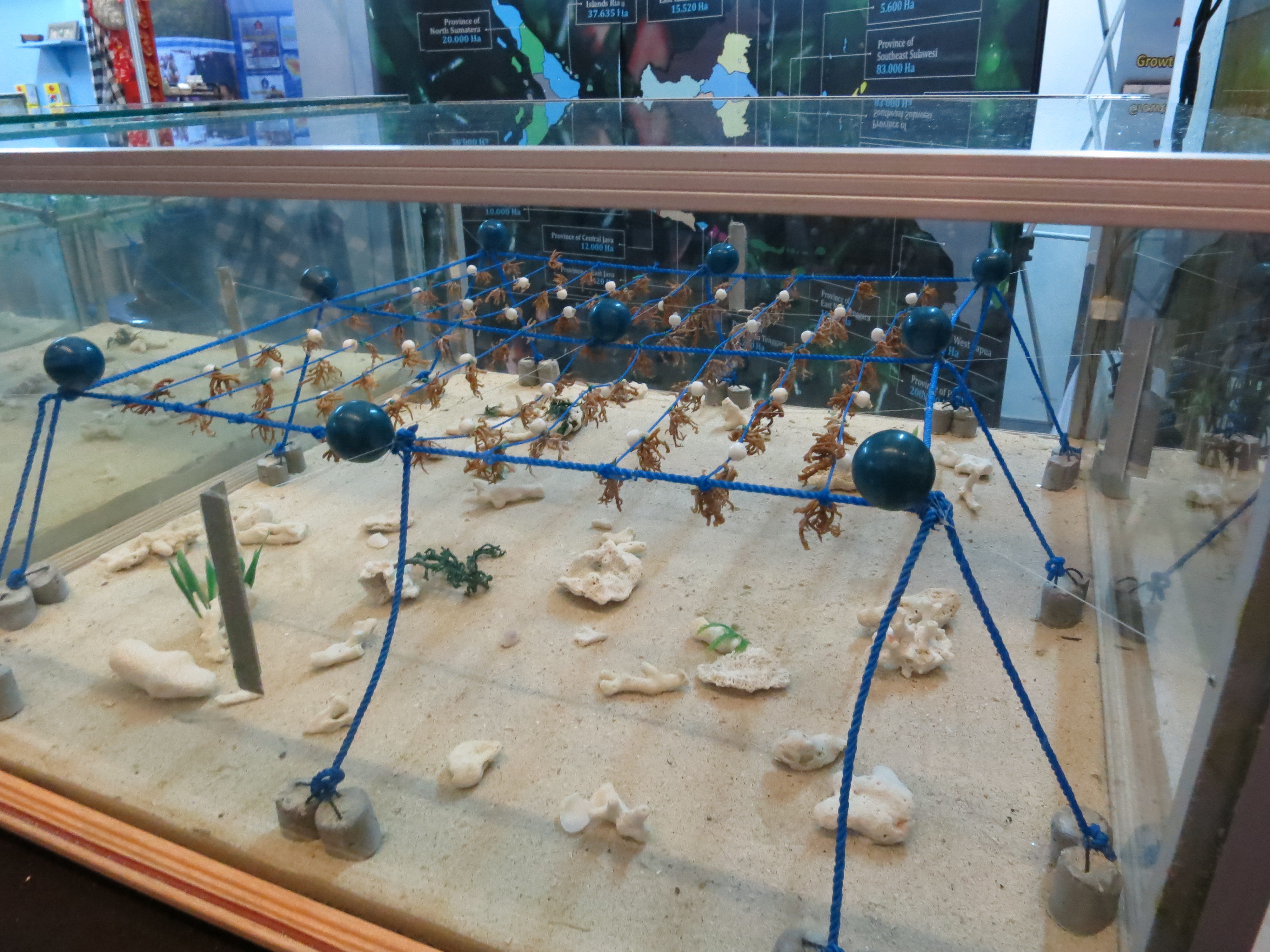
Other methods for deeper water is something called single longline rafts, spider web rafts or floating triangle, depending on how you have designed the ropes. But these rafts are secured at all four corners and thus are more stationary. It also means that you can place them closer together, without risking entanglement.

In deeper waters, single longline rafts are common.

In deeper waters, single longline rafts are common.

Some growers use hanging baskets that the seaweed is floating freely in, which does not seem like a good idea to me. But this is still at the development stage. They use high pressure water hoses to remove unwanted growth of other seaweed (epiphytes).

Dr. Flower Msuya from Tanzania showed a summary of how seaweed cultivation has started and continued for the East African coast, with examples from Mauritius, Madagascar, Tanzania and Zanzibar course. The main problem to cope with is that they are now beginning to get problems with various diseases. There is much further research to do and a lot of mistakes to learn from. At the same time, a mini-symposium was held in the hall next to this, with the topic being diseases and parasites on seaweed. It’s a hot topic for the seaweed industry.

Presentations: Integrated aquaculture and introductions
In Australia, much yellowtail kingfish and tuna are farmed. At present, there is no cultured seaweed in Australia, so the researchers are now trying to find species suitable for cultivation along with fish farms in order to reduce emissions (IMTA, see previous posts). The species they are looking for are those that are good at taking up nitrogen from fish farms, but there should also be a market for the seaweed.

Kathryn Wiltshire from the University of Adelaide tested several species of red and brown seaweed to see which was best at taking up nitrogen and which grew fastest, in order to select species suitable for further experiments with the conditions that give the best performance.

Tom Schils from the University of Guam (you get extra points if you know where it is without looking it up) told us that coral reefs in Micronesia and the Pacific have very distinct algal communities, which are now threatened by introducing new varieties of these species bred for cultivation. A well-known example is the red alga Acanthophra spicifera that has taken over shallow waters on coral reefs around Hawaii.

Micronesia has a Biosecurity Plan, which seeks to identify and prevent threats to the marine environment, such as how to manage ballast water which is a great disseminator of species from one place to another.

Dr. Yang from China showed how the farming of the red alga Gracillaria spp. is along China’s 18,000-kilometer coastline and how China is now working to develop the use of integrated aquaculture. Between 1967-1980, 50-60% of China’s aquaculture consisted of cultured seaweed, mainly brown alga Saccharina japonica. Since then, the proportion of farmed fish, shrimp, crabs and clams increased. It leads to increased nitrogen load, and you need to cultivate more seaweed to not have problems with eutrophication.
The production of Gracillaria spp. is rising steadily, from 0.13 hectares in 2000 to 1,067 hectares in 2007. In 2011, the total cultivation area of Gracillaria was an astonishing 1,500 hectares!

International Seaweed Symposium – Day 3; A day off

It may seem strange that you need a day off after only two days, but it has been so intense that it was badly needed!

The BalticSeaWeed blog went up into the mountains and visited Bali’s botanical garden, where there were plenty of orchids and ferns.

Fern trees are just lovely!

Fern trees are just lovely!

We even got our guide to become totally confused when we stood and looked at a tree and photographed it for five minutes, instead of looking at the temple that we visited, or at least photographed the beautiful flowers. But the tree trunk was full of beautiful lichens, which actually consists of a fungus and an alga.

Beautiful lichens on tree trunk.

Beautiful lichens on tree trunk.

21st International Seaweed Symposium – Day 2

After a tumultuous first day, in which the brain was saturated with impressions of color, shape, flavor and facts, we now enter to the second day. Today it is presentation at the mini-symposium on my part, and in the afternoon it is the poster session for me and Lena.

Vår poster, med gummi-receptakler.

Our poster, with rubber receptacles.

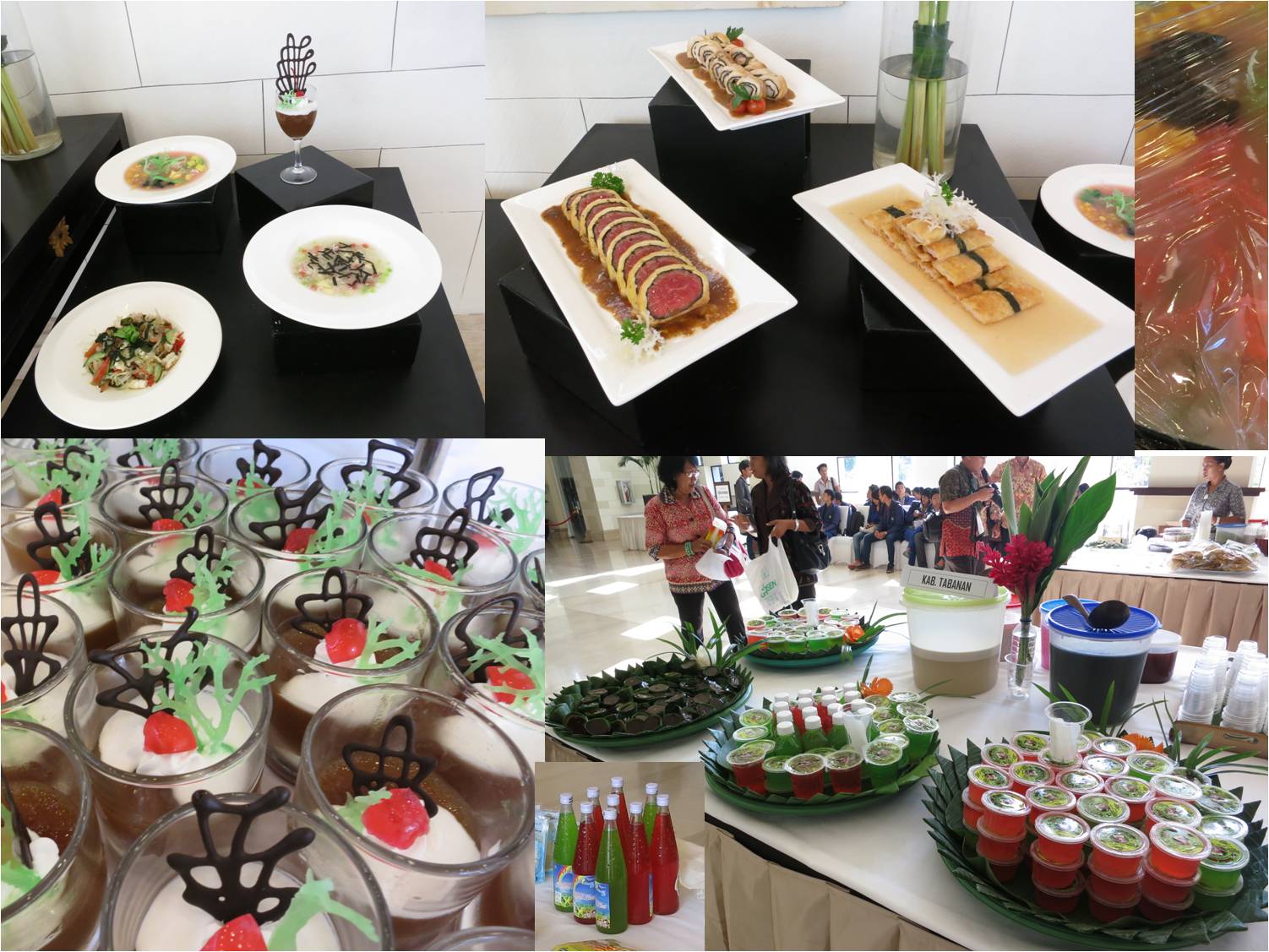
During the coffee breaks one can eat anything and everything that is based on seaweed. It gets very jello… We have also tried seaweed sausages, seaweed nuggets, seaweed-sate (this was the tastiest, very nice and spicy) and seaweed pepes (wrapped in banana leaves and grilled).

Behöver vi ens kommentera?

Should we even comment on this one?

Det finns MÅNGA sätt att använda alger i matlagning.

There are MANY ways of using algae in cooking.

We aim to find as many seaweed-products as possible to take home with us.

Weedy products

An abundance of products.

But first, a summary of the mornings scientific talks.

Mini-Symposium: Human and natural impacts on seaweed beds.

Dr. Muraoka and Dr. Fujita, both from Japan, showed how the tsunami that hit the Japanese East Coast In March 2011 has affected life in the sea. This was very interesting, because the news have generally focused on what happened on land.

In areas near the epicenter, a large acreage of seagrass meadows has disappeared. The tsunami swept over the smaller peninsulas and also destroyed many sheltered bays. But now, in 2012, it has begun to recover. However, it will take a few years, but it points in the right direction.

One of the major problems for plant life in the ocean was all the particles that were flushed out in the water. This hindered light from penetrating any deeper than 4 meters.

In Onmae Bay, there was many fish- and mussel farms before the tsunami. There were problems with fouling of the kelp species Saccharina japonica on cultivation cages and mussel ropes. An estimated 90 tons (!) of kelp grew on the farms per year. This compares to one ton of kelp from the protected rocky shores near (where sea urchins grazed extensively) and 10 tons from more wave exposed places where sea urchins could not graze.

The growth of Saccharina japonica is also favored by the nutrients coming from fish- and mussel farms. From the time of reproduction in November until May they grew a full 2 meters! The kelp is favored by good water circulation, which was higher out on the farms than on the natural hard bottom.

Today, there are large amounts of garbage from every house and car that were washed out to sea by the tsunami wave. Many breakwaters and other structures that sheltered beaches also disappeared. This has benefited the recovery of the kelp, as its worst enemy, the sea urchins, cannot graze as intensively in areas with large waves.

As they are beginning to recover from the disaster, the sea urchin fishery have commenced again. This has also helped the kelp to re-establish.

As the kelp has come back again as fouling out on the new farms, it is now a different species, Petalonia fascia, which dominates. This proved to be a problem, because it is not nearly as efficient at taking up nitrate and ammonium as Saccharina japonica. It therefore has become a problem of high nitrogen levels in the cages. There is a difference between seaweed and seaweed, you see.
So, now they are working to bring back the “right” kelp, Saccharina japonica, to avoid the kind of problems that can be caused by too much nutrients in the water. The worst of these are blooms of microalgae, so-called red tides, which can also cause shell toxin blooms, where toxic algae accumulate in mussels and other filter feeders, which becomes deadly if consumed.

So, although the system was influenced very strongly by the tsunami, it’s slowly recovering.

Presentations: Cultivation techniques II

The recurring themes in most presentations are about the importance of educating local people and create awareness. Both regarding how to grow and harvest seaweed, but also to explain the benefits and importance of creating an integrated aquaculture with many different species for an ecologically sustainable use of the ocean.

This is not a problem unique to the tropical countries. Ignorance of how to create sustainable aquaculture is found in all countries. When aquaculture first came into the limelight during the 70’s, it was first seen as the solution to the problem of protein deficiency. But it was soon discovered that large monocultures fed intensively, sometimes even with large amounts of antibiotics, were not as good as first believed. They created negative effects, and the general opinion about aquaculture turned to become negative.

To only cultivate large quantities of a single species that is in the top of the food chain is not the best way to engage in aquaculture. By co-culturing, as many gardeners know the profitability of, you can both reduce the negative effects of nutrients and also gain one or more additional products that provide income. Additionally, it provides a redundancy, not to put all eggs in one basket. Too high a density of a species makes it vulnerable to diseases and parasites. By growing more sparse, but overall more, you avoid risking the harvest to a nasty little parasite or a virus and you do not need to use antibiotics to the same extent.

21st International Seaweed Symposium – Day 1

Overwhelming! That’s the word that remains after you have entered the Bali Nusa Dua Conference Center and see all exhibitors showing 101 use of seaweed.
A phletora of products involving seaweed.

A phletora of products involving seaweed.

It is quite often I get to inform people that algae is actually a common ingredient in many of the products we use daily, such as shampoo, soap and toothpaste. But there are more represented here than I thought possible! Many companies producing various substances from seaweed are represented, followed by those that further refines the extracted elements to create all manner of products. Most exciting is of course the abundance of food with algae, both in pure form, such as seaweed snacks and jelly in different shapes (and colors!) made of agar agar extracted from seaweed. And it’s a tasting of everything! This is not a conference you go away hungry from. Possibly you have set the stage for diabetes, though.
There is no end to what gastronomy can do with seaweed!

There is no end to what gastronomy can do with seaweed!

We will post pictures, both in blog posts and in the gallery, so that you who are following the blog may take part of the diversity.

The opening ceremony of the conference began with a traditional Balinese dance and the Indonesian national anthem, followed by a number of prominent dignitaries, who in five minutes per person explained that they were pleased and proud that the conference was held here in Bali and that algae are an important part of the region’s economy and important global product. At least I think that’s what was said, when many spoke in Indonesian. But the audience seemed pleased and it was much applause. In the audience were amongst others the Fisheries Ministers from Tanzania and Morocco and Bali’s trade and industry minister.

There are a total of 38 countries participating in the symposium, most from the so-called Coral Triangle (Indonesia, Sulawesi and the Philippines) but Europe is well represented. The country with the highest number of presentations is Malaysia (57), followed by Indonesia (47), with France (31: Not bad.) in third place.
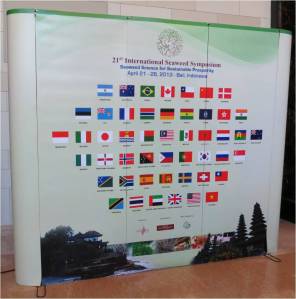
The flags of all participating nations.

The flags of all participating nations.

Mini Symposium: Integrated mulit-trophic aquaculture IMTA
Aquaculture is not without problems, as most of you probably already know. One example are fish farms, which releases nitrogen and other substances in the water around it and on the bottom under the cages. To reduce the negative effects one can grow several different species together, where the waste of one becomes the other’s nutrients. Here, seaweed is a major factor.

Alejandro H. Buschmann began by summarizing the need for more research on how seaweed work in co-cultures, if they can transfer infections between each other or to animals, and that more research is needed on integrated culture of species from different trophic levels.

Helena Abreu presented the IMTA studies conducted in Europe, which is far behind Asia in this aspect, focusing on seaweed cultivation. For example, they tried to reduce the negative environmental impacts of land-based fish farms in Norway and France by growing Ulva spp (sea lettuce) as nitrogen cleaner. The important thing is to get a seaweed product that there is a market for, either as food, fertilizer or to extract different substances from.

Interest in IMTA growing in Europe, especially since there is a need for greater production of aquaculture animals, and therefore a need for more waste treatment, but also the need for a diversity of organisms to grow, in order to have safer and more sustainable systems. The interest in seaweed is huge in Europe, not only as food but also as an ingredient in skin products and for the extraction of biofuel.

With the increased need, it is important to assess that farming and harvesting are done in a sustainable way, so that one does not get a boom-and-bust problem, taking out too much and causing the system to collaps.
In addition to the biological and technological challenges, where fish farmers should learn to cultivate a new species, there are also some regulatory barriers that need to be resolved.

Today, it is mainly Norway, Portugal, France, Ireland and Denmark that grow seaweed on a large scale in Europe. They grow mainly kelp species, mostly Saccharina latissima which can be found on our Swedish west coast, too. In Denmark, there is co-farming of kelp with trout and clams or only kelp and mussels. The kelp is grown on long ropes that hang freely in the water, looking a bit like a clothesline.

In Brittany, France, oysters and algae are farmed together. Here, it is the green alga Ulva (Sea lettuce) that is growing on oyster cages. In Portugal (using the water outside Senegal) they are cultivating kelp with sole (the flat fish), something that is also tried on the Canary Islands. In Ireland, they grow the delicious brown alga Alaria esculenta together with salmon.

In order to extract as much as possible from farmed algae there is a project to create a macroalgae biorefinery. This is collaboration between several European countries, hoping to launch a thriving seaweed culture industry also in Europe, once the current financial crisis has been resolved.

Contributed papers: Cultivation techniques

Agar is extracted from the cell walls of agar producing seaweed such as Gracillaria sp. Depending on whether the seaweed are grown in large tanks on land, in larger ponds or in the ocean, there is a variation in growth rate, growth of fouling algae, susceptibility to various diseases and the chemical content of the algae.

In Malaysia, Dr Su has assessed the pros and cons associated with each method, and also tried other methods. This included the use of floating net cages, which are often used in fish farming. They also let spores settle on fixed bottom nets and ropes, which gave a greater return on the ropes over the nets. Problems connected with ropes and nets were primarily that many other species also liked to grow there (fouling).
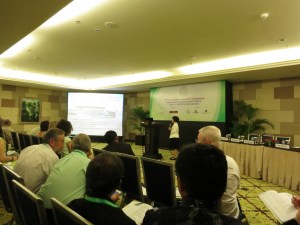
Dr Su from Malaysia explains her findings in culture methods.

Dr Su from Malaysia explains her findings in culture methods.

To evaluate which method was the best, not only in quantity algae produced per unit of time, they also analyzed the finished agar powder to compare the quality of the product. They found that from some areas the product contained excessive levels of lead, too high to be sold as food. The water chemistry and pollution history of an area are important to take into account when determining whether to start growing seaweed for consumption.
The main problems, though, are still grazing and unwanted growth of other species (fouling).

Norwegian salmon farming is growing rapidly. Up in Trondheim, where there are plenty of salmon farms, they have grown Saccharina latissima outside the salmon pens. The seaweed are seeded on long ropes in the lab, then hung out in the water.
Saccharina latissima is seeded in August and will not grow much during the dark winter. But when the light comes back in February to March it starts growing and keep growing strongly until June, where it reaches its maximum. This is harvest time. If you leave it any longer it begins to deteriorate and get more fouled by animals and other algae. Also, the highest concentrations of carbohydrates (alginate, laminated aria and mannitol) are in June.

Saccharina latissima grows best at 5 meters depth, where there is just the right amount of light, neither too much nor too little. Saccharina latissima grown in a salmon farm grew a full 50% more! Norway is ideally situated in order to develop a profitable seaweed faming industry and develop a more integrated aquaculture.

A study from the UK compared various plastic materials in order to find out what kind of surface and chemical composition that is best for seeding and growth of two different species of kelp (Laminaria digitata and Saccharina latissima).

They tried 12 (!) different plastics with different chemical properties, including a plastic consisting of phenol-formaldehyde resin (super toxic!) to see how sensitive the small spores are (kelp, unlike bladderwrack, has spores).

The competition between the two kelp species were checked after seeding, after 5 weeks, after being moved outdoors and after 3 months. Saccharina latissima is more tolerant to the chemical than Laminaria digitata and grew better on most plastics (few to none survived on the super toxic). It seems that plastic is not the best substrate to cultivate Laminaria digitata, but most plastics work well for growing Saccharina latissima. If you want to grow both species, the best plastics are PE, PP and PVC, apparently.

It’s Seaweed Time!

After a long and cold winter in Sweden, it is finally time for the 21st Intenational Seaweed Symposium to kick off in Bali.

There are more than 500 participants and the program is full of interesting talks, mini-symposia and posters. For full details, download the programs on the symposium website.

We will endeavour to summarize the different topics presented during the symposia, so that our followers have plenty to discuss over coffee or tea.

While we are waiting for the registration to open, here are som pictures of seaweed that we have already found, while acklimatizing to the climate and timezone (read: been on a holiday here). Enjoy!

A green entanglemetn of Chaetomorpha

A green entanglemetn of Chaetomorpha

A beautiful red algae.

A beautiful red algae.

This one reminds me of Furcellaria lumbricalis.

This one reminds me of Furcellaria lumbricalis.

Spinning eggs for Easter

I am going to render a normal conversation that often happens when I talk about seaweed and what I do.

– So, you work with seaweed. Nice! What do you do with it?
– Well, among other things I try to cross different species with one another in order to understand how speciation occurs.
-That sounds interesting. When does the seaweed bloom, then? Or….does it have flowers?
-Nope, it has eggs and sperm just like us. Bladderwrack and narrow wrack have male and female plants and actually have an almost identical lifecycle to humans.
-It has eggs and sperm?! But…is it an animal, then?

Suddenly you realize that what you learned during biology class in school was just a rough cut, simplified picture of reality. Nature and evolution is so much more than that, with more imagination and concepts than we humans are able to name.

I think it is fantastic that algae, some of the planet’s first living organisms, have used eggs and sperm for a long time. Maybe longer even than humans have been around. A flick on the nose at us when we think we are evolutionarily advanced.

Here’s a video of how eggs from bladderwrack start spinning by all the sperm swimming around them, hoping to fertilize. Beautiful!

Book on Irish Seaweed

There is a new book on seaweed around Ireland, written by Michael Guiry, well known authority on seaweeds with over 200 scientific publications (thats a lot, folks!), and founder of the fantastic seaweed database algaeBASE.

This book is a must-have for all seaweed people, especially since the 48th European Marine Biology Symposium is held in beautiful Galway on the west coast of Ireland this year in August.

To learn more about the marine flora of Ireland, visit The Seaweed Site, also created by Michael Guiry, where you can find a lot of information, books and other useful knowledge.

Baby Fucus and red algae on mussel shell

Baby Fucus and red algae on mussel shell